XMS Portal 2026: Login Guide, Password Reset & Account Access
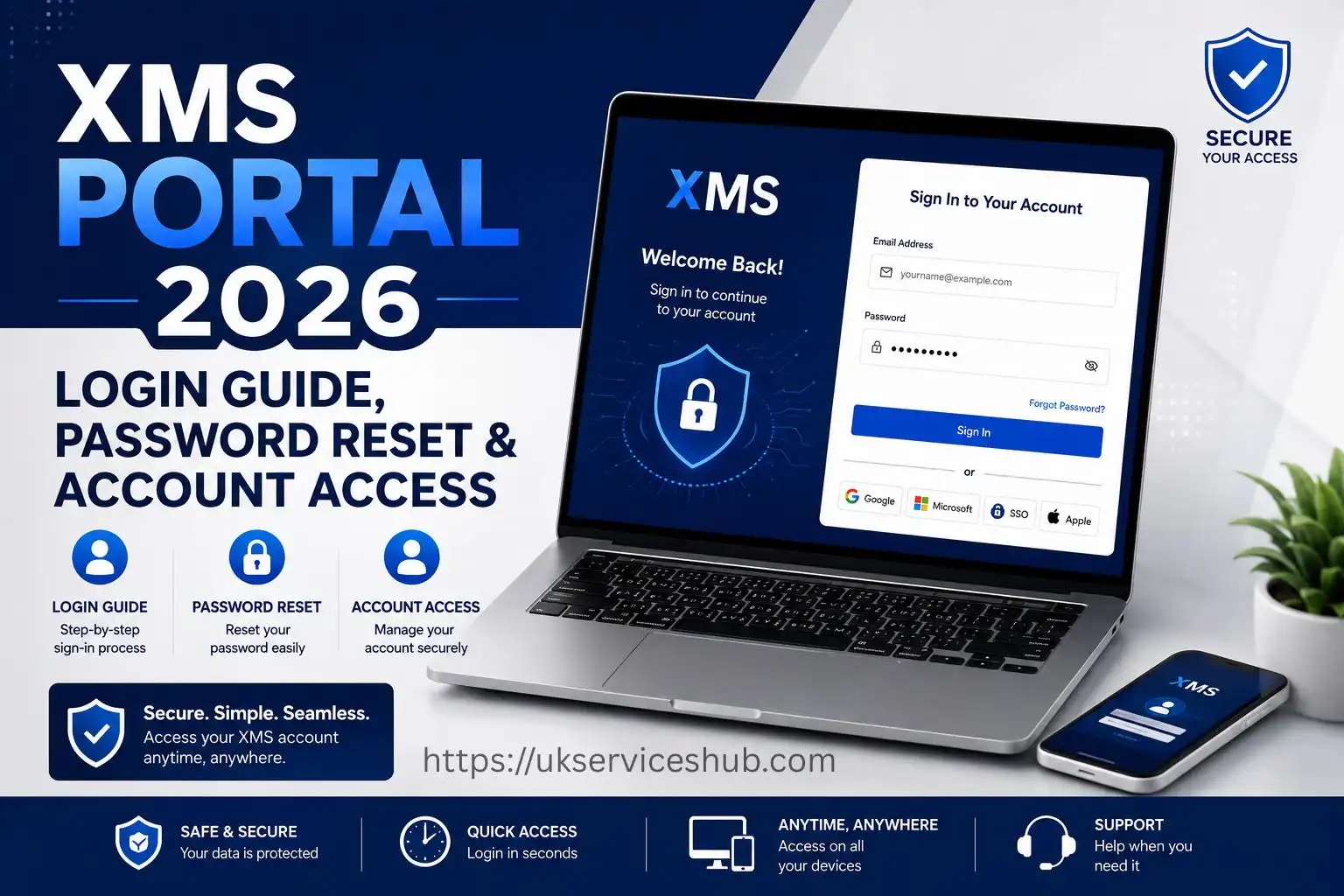
The XMS Portal provides a central online login point for users who need to access their XMS account. If you are trying to reach the XMS login portal, the official sign-in page lets you enter your email address and password, while also providing alternative authentication options such as SSO and Reed ID.
For the safest route, always start with the official XMS website rather than using an unfamiliar login page or third-party link.
This guide covers the main XMS sign-in process, alternative login methods, password recovery, account access problems and practical troubleshooting tips.Visit our Homepage for more information Click Here
What Is the XMS Portal?
The XMS Portal is an online account access system. Its official login page is titled “XMS Login” and provides fields for an email address and password. Users can also choose Login via SSO or Login via Reed ID, depending on the authentication method available to their account.
Because different users may have different account arrangements, the exact sign-in method can depend on how their organisation has configured access.
XMS login options at a glance
| Login option | What it means |
|---|---|
| Email and password | Standard XMS account sign-in |
| SSO | Sign in through an available single sign-on provider |
| Reed ID | Use the Reed ID login option where applicable |
| Password recovery | Request a password reset or account unlock |
The portal also provides a dedicated Forgot Password/Unlock Account option, which is useful if you cannot access your account using your normal credentials.
How to Complete an XMS Login
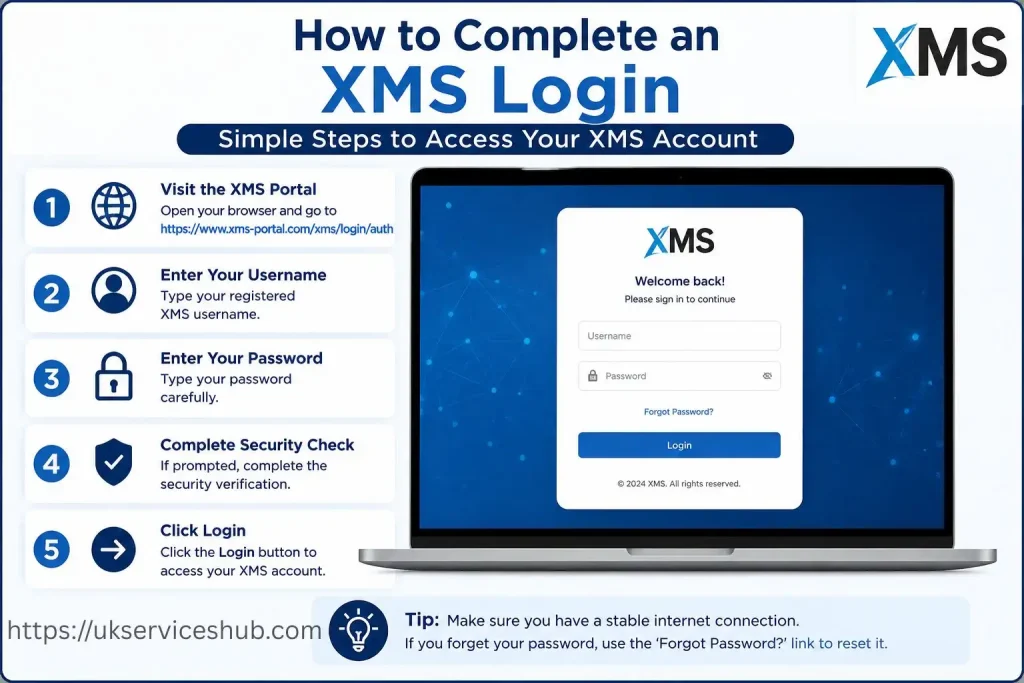
If you already have an XMS account, signing in should begin from the official portal.
Step 1: Open the official XMS website
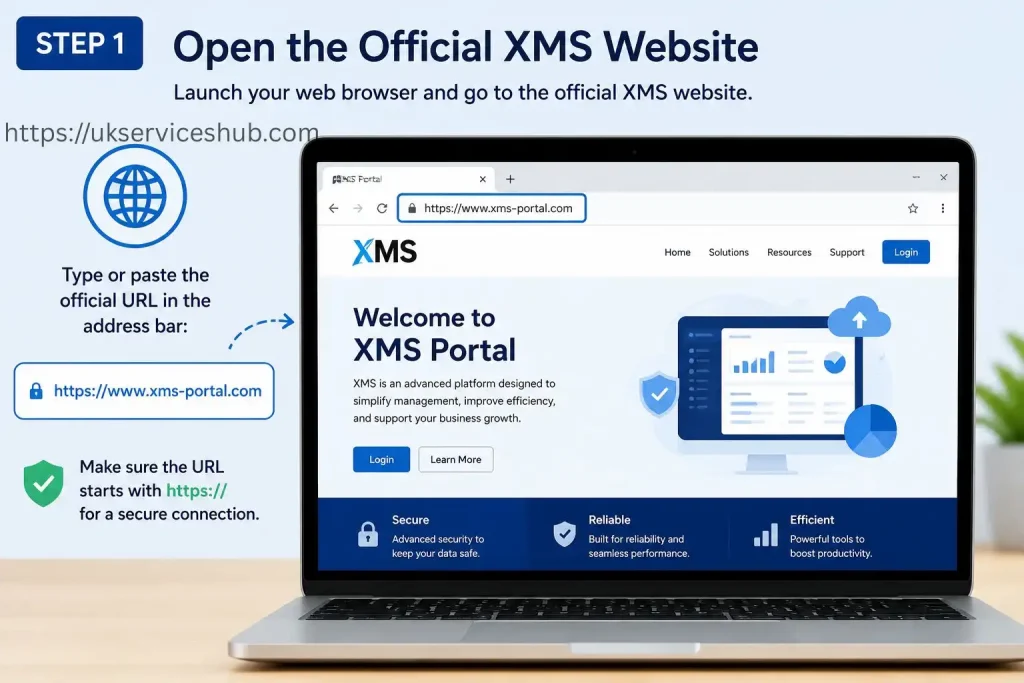
Go directly to the official XMS login page:
The page currently displays the XMS Login heading together with fields for your email address and password.
Security tip: Check the website address before entering your login details. Avoid submitting your password through links received from unknown sources.
Step 2: Enter your email address
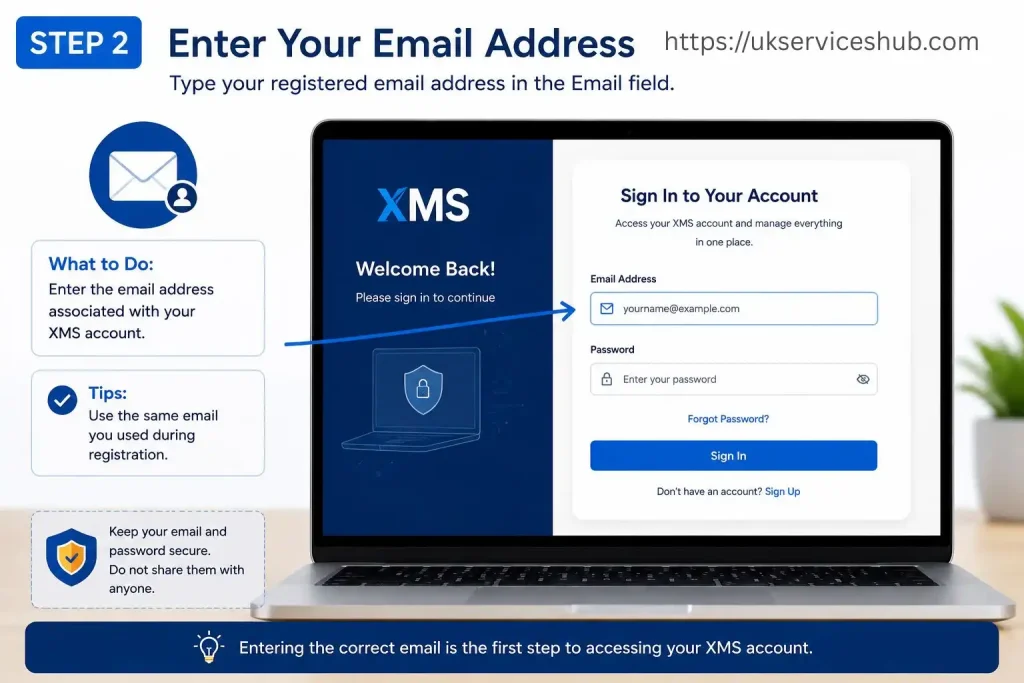
Select the Email address field and enter the email connected to your XMS account.
Take a moment to check the spelling. A small typing error can prevent authentication even when the password itself is correct.
Step 3: Enter your password

Type your current XMS password into the password field.
If you are using a shared computer, avoid saving your password in the browser unless you trust the device and understand its security settings.
Step 4: Submit your login
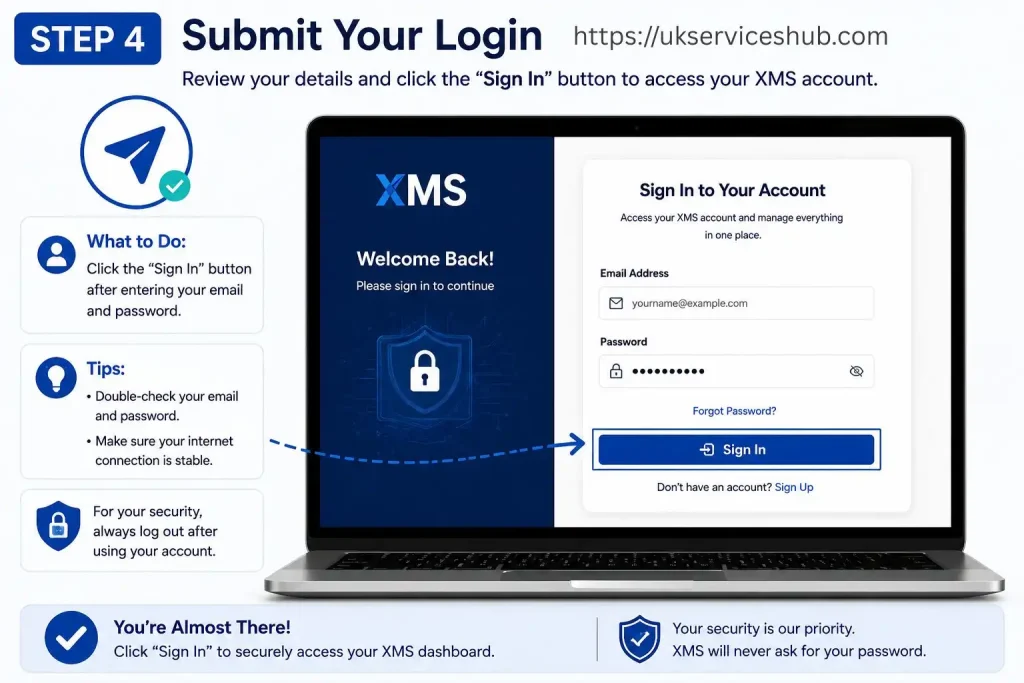
After entering both credentials, continue with the login process shown on the page.
If the details are accepted, you should be taken into your authorised XMS account area.
Step 5: Use an alternative sign-in method if available

The official portal also displays Login via SSO and Login via Reed ID.
If your organisation has provided one of these methods, use the relevant option instead of repeatedly attempting a standard password login.
XMS Login via SSO
Single sign-on, commonly called SSO, allows an organisation to connect account access with another authentication service.
The XMS login page includes a dedicated Login via SSO option.
If SSO is the method provided to you:
The exact SSO process can vary according to the organisation or identity provider connected to the account.
Why use SSO?
SSO can be useful when your organisation manages authentication centrally. Instead of maintaining a separate password for every connected service, the organisation may provide a common sign-in route.
If SSO does not work, do not assume your XMS account has been deleted. Check whether your organisation has changed its authentication method or whether you are using the correct account.
XMS Login via Reed ID
The official XMS page also provides a Login via Reed ID option.
Where Reed ID is applicable to your account, select that option and follow the authentication instructions displayed by the portal.
This is particularly important for users whose access has been configured around Reed authentication. Trying unrelated credentials through the standard email-and-password form may not resolve an authentication issue if your account is intended to use Reed ID.
What If You Forget Your XMS Password?
For users who cannot remember their password, the official XMS portal provides a Forgot Password/Unlock Account link.
Select this option rather than repeatedly guessing passwords.
The official recovery page asks for your email address and states that a link will be sent to reset the password or unlock the account.
Official password recovery page:
XMS password reset steps
The official recovery page specifically indicates that the submitted email address is used to send a link for password reset or account unlocking.
If the reset email does not arrive
Check your:
Also make sure you entered the correct email address. If the address is wrong, the recovery message may not reach you.
XMS Account Unlock
Password recovery and account unlocking are presented together on the official XMS recovery route.
If your account has become inaccessible after repeated unsuccessful attempts, use the official Forgot Password/Unlock Account process instead of continuing to enter random passwords.
Repeated failed attempts can make troubleshooting harder, particularly if your organisation has additional security controls.
Common XMS Login Problems
Not every failed login is caused by an incorrect password. Browser problems, delayed verification messages and temporary account restrictions can also interfere with access.
Here are the most common issues and practical solutions:
| Problem | Possible reason | What to try |
|---|---|---|
| Invalid credentials | Incorrect email or password | Re-enter the details carefully and check Caps Lock |
| OTP not received | Network or email filtering delay | Wait, check Spam/Junk and use Resend if available |
| Page keeps loading | Browser cache or cookies | Clear cache/cookies or use a private window |
| Account locked | Several unsuccessful attempts | Use the account recovery route or contact support |
| Session expires | Extended inactivity | Refresh and sign in again |
These troubleshooting steps are particularly useful when the portal itself is available but your individual session is not working correctly.
Fixing an Invalid XMS Login
An invalid credentials message normally means the information entered does not match the account details expected by the system.
Before requesting support, check:
If you have forgotten your password, use the official recovery page rather than repeatedly attempting different passwords.
XMS Portal App: What You Should Know
The keyword XMS Portal app may be used by people searching for a mobile way to access XMS. However, the source material provided for this article does not establish details about an official standalone XMS mobile application.
For that reason, do not assume that a third-party application claiming to provide XMS access is official.
The safest starting point is the official XMS website and its login page. The current official page confirms browser-based access through the XMS Login interface.
If you are using a phone or tablet, you can first open the official portal through your device’s browser and follow the available authentication options.
Before You Sign In: A Short Checklist
Before attempting an XMS login portal session, make sure you have:
XMS Portal Troubleshooting, Password Recovery & Account Access
Getting into the XMS Portal is usually straightforward, but a login problem can have several causes. The quickest solution depends on whether the issue is your credentials, password, verification code, browser session or account status.
The official XMS login page provides both standard email-and-password access and alternative SSO and Reed ID options. It also links users to password recovery and account-unlock support.
What to Do When XMS Login Does Not Work
Start by identifying the exact problem rather than repeatedly trying to log in.
1. Check your login details
If you receive an invalid credentials message, carefully re-enter your email address and password.
Check for:
If the credentials still fail and you cannot remember your password, use the official recovery option.
2. Confirm the correct login method
Not every XMS user necessarily signs in in the same way. The official page provides three routes:
If your organisation expects you to use SSO or Reed ID, selecting the standard password form may not be the appropriate route.
How to Recover Access to an XMS Account
The official XMS recovery page combines password recovery and account unlocking. You can access it from the Forgot Password/Unlock Account option on the login page.
Official recovery page:
The recovery process begins by entering the email address associated with the account. The page states that a recovery link is sent to that address.
Password recovery checklist
Before submitting the request, make sure you are using the email address connected to your XMS account.
After requesting recovery:
If the message does not appear immediately, avoid submitting repeated requests too quickly. Email delivery can sometimes be delayed.
XMS OTP Code Not Received
An OTP, or one-time password/code, may be required during an authentication process depending on your account setup.
If you are expecting an OTP but nothing arrives, the information supplied for this guide identifies two likely causes: network delay or spam filtering.
Try these actions:
If a new code arrives after requesting another one, use the most recent code where applicable.
Why waiting can help
Verification messages are not always delivered instantly. Sending multiple requests in quick succession can also make it unclear which code is current.
Give the first request a short period to arrive before requesting another.
XMS Portal Page Keeps Loading
Another common problem is an XMS page that fails to load correctly or becomes stuck in an endless loading loop.
The provided troubleshooting information identifies corrupted browser cache or cookies as a possible cause.
Try the following:
An alternative is to open the XMS website in an Incognito or Private browsing window.
This is useful because a private window can help determine whether stored browser data is contributing to the problem.
XMS Account Locked
If several unsuccessful login attempts have occurred, your account may become temporarily locked.
The supplied troubleshooting information recommends waiting approximately 15–30 minutes for automatic unlocking where applicable.
After waiting:
If the account remains unavailable, contact the relevant system support or Helpdesk rather than repeatedly attempting authentication.
XMS Session Timed Out
For security reasons, an online session can expire after a period of inactivity.
If your XMS session times out:
If you are completing a form or entering information, save your work periodically where the system provides a save option. This reduces the risk of losing information when a session expires.
Browser Troubleshooting for XMS
A browser problem can sometimes look like an account problem.
If the XMS login portal is not behaving normally, try these basic checks:
| Check | What to do |
|---|---|
| Browser cache | Clear cached files |
| Cookies | Clear relevant cookies |
| Private mode | Try Incognito/Private browsing |
| Connection | Check your internet connection |
| Browser | Try another up-to-date browser |
| Login URL | Return to the official XMS address |
| Credentials | Re-enter your details carefully |
You do not need to change everything at once. Start with the simplest solution and test the portal again.
Is There an Official XMS Portal App?
People searching for XMS Portal app may expect a dedicated mobile application. However, the supplied source information does not confirm the existence, name, availability or supported platforms of an official XMS mobile app.
For that reason, it is better not to install an application simply because it uses the XMS name.
Instead, use the official XMS website and login page:
If your organisation has specifically instructed you to use a mobile application, follow the application’s official distribution information supplied by that organisation.
Using XMS on a Mobile Device
If you need to access the portal from a smartphone or tablet, begin by opening the official XMS login address in your device’s browser.
The key points remain the same:
Avoid relying on unofficial login pages that imitate the appearance of the XMS website.
How to Stay Safe When Using XMS Login
Account security starts before you enter your password.
Step 1. Use the official website
Bookmarking the official login page can reduce the chance of accidentally visiting an imitation website.
Step 2. Do not share your password
Your password should remain private. If another person needs access to an account, use the authorised account-management process instead of sharing credentials.
Step 3. Be careful with login links
If you receive a message asking you to sign in, check where the link leads before entering any information.
When in doubt, open the official XMS website directly rather than clicking an unfamiliar login link.
Step 4. Keep your browser updated
A current browser can provide better compatibility and security than an outdated version.
XMS Login Problem: Quick Decision Guide
Not sure where to begin? Match the problem to the likely solution:
Forgot your password?
→ Use Forgot Password/Unlock Account.
Credentials rejected?
→ Check your email, password, Caps Lock and login method.
OTP missing?
→ Wait, check Spam/Junk and use Resend OTP if available.
Page keeps loading?
→ Clear cache/cookies or try Private browsing.
Account locked?
→ Wait 15–30 minutes, then retry or use the recovery option.
Session expired?
→ Sign in again and save work regularly.
SSO not working?
→ Confirm that SSO is the correct authentication method for your account.
Reed ID not working?
→ Make sure you are using the Reed ID route provided for your account.
Common XMS Login Mistakes to Avoid
Some problems can be prevented with a few simple habits.
Repeatedly guessing a password
If the first few attempts fail, stop and check the credentials. Continuing to guess can contribute to account-lockout problems.
Using an old saved password
Browser password managers can contain outdated credentials. If you recently changed your password, make sure the browser is not automatically filling an older one.
Choosing the wrong authentication option
The official page provides separate SSO and Reed ID routes. If one of these is intended for your account, use it rather than repeatedly trying another method.
Ignoring browser problems
If the page works normally in another browser or a Private window, stored browser data may be the cause.
Using unofficial websites
Search results can contain pages that are not the actual service. For account security, start with the official XMS domain.
XMS Portal Access Checklist
Before contacting support, work through this short checklist:
This can help you identify a straightforward login problem before escalating it.
Frequently Asked Questions (FAQs)
Conclusion
The XMS Portal 2026 provides a secure and convenient way to access your account and supported applications. Completing an XMS login is straightforward: open the official portal, enter your registered email address and password, and submit your credentials. If an alternative sign-in method is available, you may also use the option provided on the login page.
If you forget your password or experience login problems, use the available password-reset option or contact the XMS Helpdesk for further assistance. For security, always protect your login details and access the portal through the official XMS website.
With this XMS Portal login guide, you can confidently manage your account access, reset your password when necessary, and get back to the applications you need.